Key points at a glance
- In 2024, only 5 % of substations were capacity-limited for solar (grid congestion areas); 95 % are available without restriction.
- The new grid package links redispatch compensation to the site: reduced compensation in grid congestion areas, capped at 20 % of annual generation and limited to 6 years.
- Only 9 % of new solar capacity in 2025 was located in congestion areas, but it caused most of the increase in redispatch. The problem is highly concentrated, not widespread.
- Agrivoltaic developers such as Ylektra benefit from greater flexibility in site selection, which lets them avoid grid congestion areas in a targeted way.
Anyone developing a ground-mounted or agrivoltaic system today can no longer rely solely on irradiation, land availability and a grid connection commitment. With the federal government’s grid package, a new variable comes to the fore: the status of the connecting grid as a capacity-limited grid area, also referred to in political parlance as a grid congestion area. On 8 September 2026, E‑Bridge Consulting, on behalf of the Federal Ministry for Economic Affairs and Energy (BMWE), presented the data on which this new steering instrument is based. The results are directly relevant for action by solar and agrivoltaic developers.
The problem: solar expansion is faster than grid expansion
In some regions, the accelerated expansion of photovoltaics meets distribution grids that cannot keep pace. The result is growing redispatch volumes and rising system costs, plus an incentive problem: new solar installations are sometimes built where curtailment is already above average, thereby worsening exactly the bottlenecks that they actually help to finance. Without a steering corrective, this effect threatened to intensify as expansion progressed.
The regulatory framework: grid package and location-based steering
The cabinet decision of 29 July 2026 on the EEG amendment and the grid connection package addresses exactly this problem. The core idea: installations that deliberately connect to a substation or line section designated as capacity-limited receive reduced compensation in the event of redispatch curtailment, capped for solar at 20 per cent of annual generation and limited to six years. Bids will in future be tied to the specific land parcel, so the grid compatibility of the site has to be checked before the bid is submitted.
A prerequisite for this location-based steering is a transparent, nationally consistent designation of capacity-limited grid areas by the distribution system operators, based mainly on a curtailment rate of more than five per cent in the previous year, separately for solar and wind, time-limited and regularly reviewed. The E‑Bridge study provides exactly this designation methodology: it was developed in consultation with the German Association of Energy and Water Industries (BDEW) and 21 high-voltage grid operators affected by redispatch, and analyses around 3,000 substations based on the Market Master Data Register, OpenStreetMap, Netztransparenz.de and weather and geodata, with a focus on 2024, the year with the most reliable data.
The results: solar expansion remains largely unaffected
For photovoltaics, the study shows that around five per cent of substations were capacity-limited in 2024; 95 per cent of the grid is available to solar installations without restriction. As with other generation technologies, the limitation is not a widespread phenomenon but is concentrated in individual grid areas with structurally limited absorption capacity, where high solar feed-in already meets recurring bottlenecks today.

In 2025, the share of capacity-limited grid areas rose further compared with 2024 as a result of new solar capacity. The spatial distribution shows a clear concentration in regions that already have high solar penetration; for new projects in exactly these areas, the risk of falling under the new location-based steering therefore increases.
At the same time, the study shows how localised the problem actually is: in 2025, only around nine per cent of the new solar capacity examined was connected to capacity-limited substations, but these few sites caused the majority of the total increase in redispatch volume (around 72 per cent, solar and wind combined). The vast majority of new solar installations therefore continue to be built where they can be integrated into the grid without significant curtailment. For comparison: wind energy shows a very similar pattern, with an even slightly lower share of affected substations. This indicates that the steering instrument works across technologies on individual hot spots in a targeted way, instead of structurally slowing down expansion.
What this means for project development
For Ylektra, the study confirms an approach we already follow in land acquisition: grid compatibility is not a blanket regional characteristic but a question of the specific land parcel. Since bids will in future be site-specific, an early check of the connecting substation determines a project’s curtailment risk, long before actual urban land-use planning begins. We check this factor systematically as part of our site assessment, together with criteria on deviations from regional planning targets and EEG criteria.
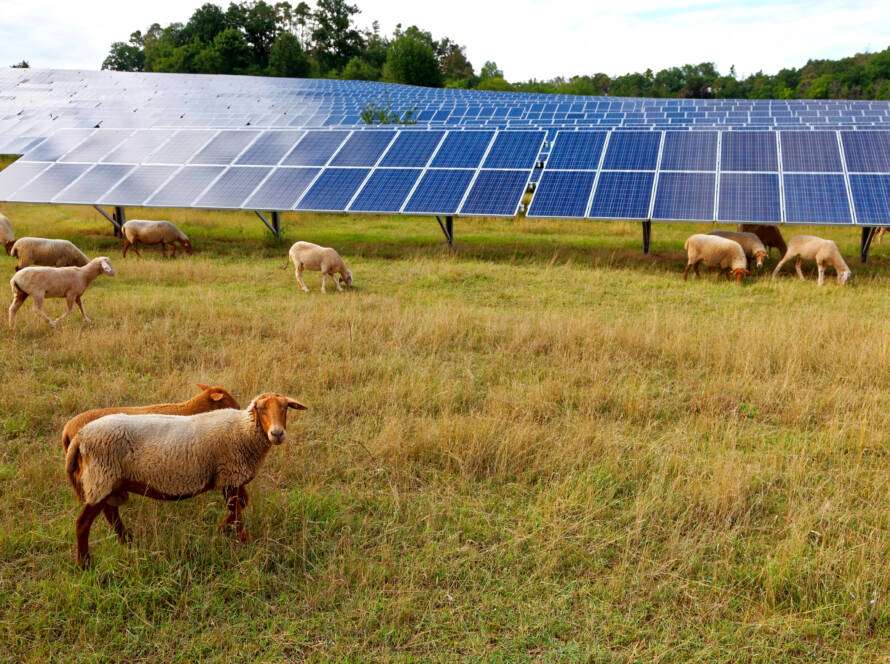
Agrivoltaics has a structural advantage here: dual use of agricultural land often opens up more site alternatives within a search area than conventional ground-mounted solar, because agricultural use and the grid connection point can be considered separately. Projects can thus be aligned specifically with non-limited grid sections without compromising on agricultural suitability.
Conclusion
For the first time, the E‑Bridge study provides a reliable, nationwide data basis for an instrument that works in a targeted rather than blanket way: it addresses a few structural hot spots in solar feed-in without slowing down the overall expansion path of photovoltaics. For developers, the competitive advantage therefore shifts further towards careful, early site assessment at land parcel level, a field in which diligent craftsmanship in project development translates directly into project economics.
Frequently asked questions (FAQ)
What is a grid congestion area (capacity-limited grid area)?
A substation or line section at which more than five per cent of the energy generated was curtailed through redispatch. The designation is made transparently by the distribution system operators and reported to the Federal Network Agency.
Who determines which areas are affected?
The distribution system operators designate the areas on the basis of objective, traceable criteria, taking into account redispatch calls by both distribution and transmission system operators, separately for solar and wind technology.
From when does the rule apply in practice?
Since the designation is based on the previous year’s redispatch data, a designation can be made at the earliest on the basis of the 2026 redispatch measures (some of which are still outstanding). The study is intended as a blueprint for the actual designation after the end of 2026.
Does the steering instrument slow down the expansion of agrivoltaics?
According to the available data, not structurally: 95 per cent of substations are not capacity-limited for solar. What will be decisive is an early, parcel-specific check of the grid connection point in each individual case, which is exactly where careful project development comes in.
Source: E‑Bridge Consulting GmbH, “Kapazitätslimitierte Netzgebiete als Datengrundlage für ein Steuerungsinstrument zur Koordination von Netz- und EE-Ausbau” (capacity-limited grid areas as a data basis for a steering instrument to coordinate grid and renewable expansion), on behalf of the Federal Ministry for Economic Affairs and Energy, 8 September 2026.