
In Soest-Deiringsen, Ylektra is starting construction of an agrivoltaic system with tracker technology. The project, with an output of around 5.1 MWp, combines agricultural use, solar power generation and shared use of existing grid infrastructure with a neighbouring wind farm. Single-axis trackers in 2P configuration are used. More than 90 % of the land remains available for farming.
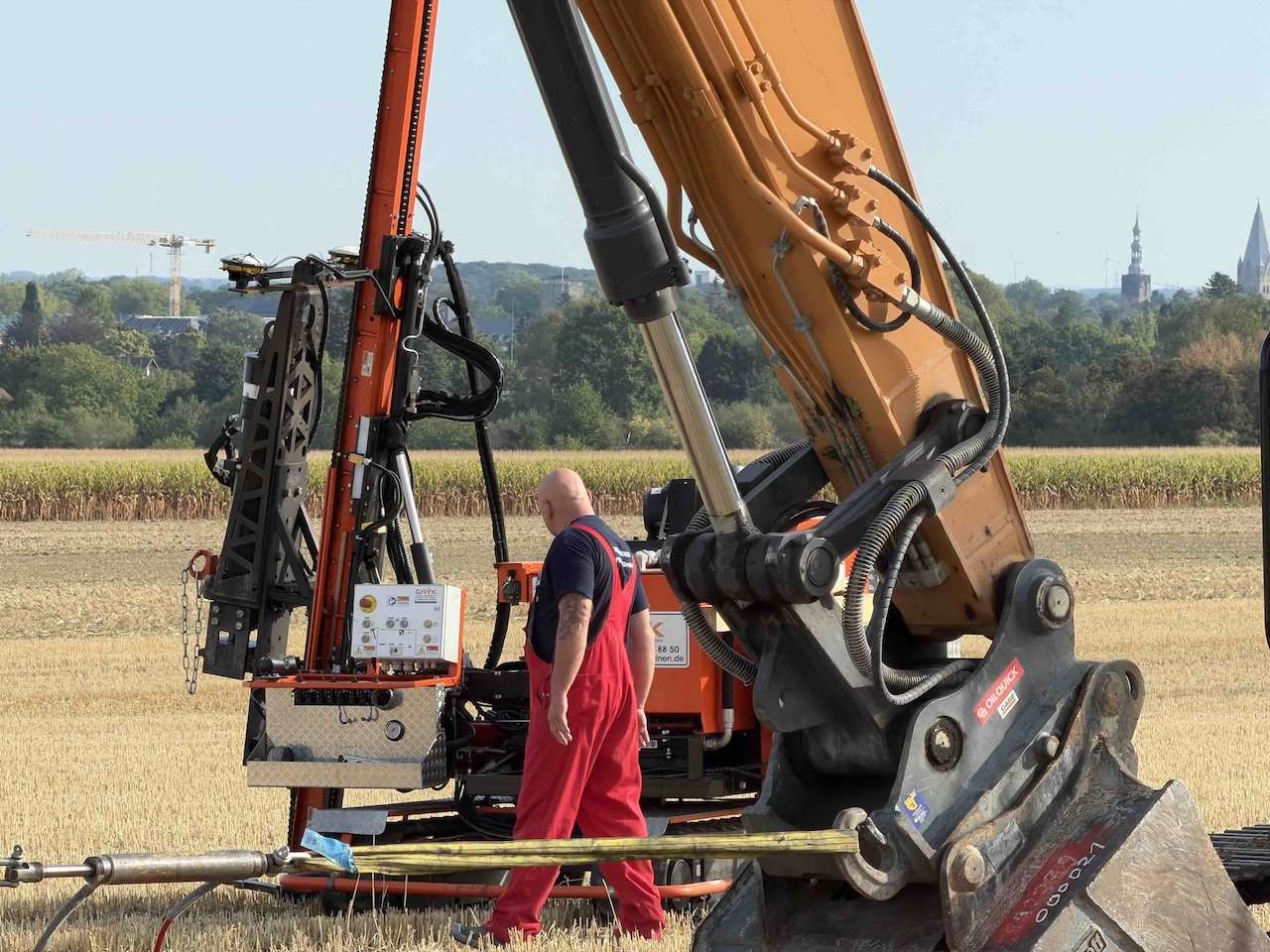
Key facts about the agrivoltaic system with tracker technology
| Feature | Details |
| Project | Agrivoltaic system with tracker technology in Soest-Deiringsen |
| Output | around 5.1 MWp |
| Technology | single-axis trackers in 2P configuration |
| Agrivoltaics category | category 2 under DIN SPEC 91434 |
| Agricultural use | more than 90 % of the land |
| Sealed surface | less than 1 % |
| Owner | farmer Markus Schlotmann |
| Implementation | Ylektra GmbH |
| Ylektra’s role | project developer and EPC general contractor |
| Grid connection | shared with a neighbouring wind farm |
| Offtake | in cooperation with Stadtwerke Soest, the local utility |
| Support model | realised outside EEG support |
| Commissioning | planned for mid-2027 |
Construction start in Soest: Ylektra develops and builds an agrivoltaic project
In the Soester Börde, construction has begun on an agrivoltaic system that combines three key requirements: agriculture, solar power generation and efficient use of existing grid infrastructure.
The system is being built on arable land owned by farmer Markus Schlotmann in Soest-Deiringsen. Ylektra designed the agrivoltaic system and is responsible for turnkey implementation as EPC general contractor. This includes planning, permitting, procurement, construction, grid connection coordination and commissioning.
A special feature: the project is being realised outside EEG support. This is made possible by particular local conditions, cooperation with Stadtwerke Soest on electricity offtake and shared use of the grid connection infrastructure with a neighbouring wind farm.
Why agrivoltaics reduces competition for land between agriculture and solar power
Germany wants to expand installed photovoltaic capacity significantly by 2030. A large part of this expansion will take place on open land. At the same time, agriculturally valuable arable land is limited and indispensable for producing food and animal feed.
Conventional ground-mounted solar often takes agricultural land out of regular cultivation for decades. Agrivoltaics addresses exactly this conflict of objectives.
Agrivoltaics refers to photovoltaic systems in which land is used for agriculture and solar power generation at the same time. Food, animal feed and renewable electricity can thus be produced on the same land.
With the agrivoltaic system in Soest, more than 90 % of the land remains available for farming. The project thus combines the expansion of renewable energy with maintaining agricultural use.
Agrivoltaics category 2 under DIN SPEC 91434
In Germany, what counts as agrivoltaics is described by DIN SPEC 91434, among other things. It distinguishes two basic categories:
- Category 1: highly elevated systems under which farming takes place.
- Category 2: ground-level systems where farming takes place between the module rows.
The system in Soest is designed as category 2 agrivoltaics under DIN SPEC 91434. In category 2 systems, a substantial part of the land must remain available for farming. With more than 90 % of the land still farmable, the system in Soest is well above this threshold.
The project thus shows how ground-level agrivoltaic systems can be planned so that they remain compatible with modern agricultural cultivation.
Tracker technology: single-axis tracking in 2P configuration
For the agrivoltaic system in Soest, Ylektra uses single-axis trackers in 2P configuration, with two modules arranged one above the other on one axis. Over the course of the day, this axis follows the position of the sun from east to west.
Single-axis trackers are tracking systems that automatically align PV modules with the position of the sun. The module angle therefore changes over the course of the day.
Tracker technology has several advantages for agrivoltaics:
- Higher and more even yields: over the course of the day, the modules are more often at a favourable angle to the sun. Especially in the morning and evening, the system can therefore generate more electricity than a fixed south-facing system.
- More valuable generation profiles: with trackers, solar power is distributed more widely over the day. A larger share of generation therefore falls in the morning and evening hours, when solar power can often be economically more attractive than at midday.
- Moving shade instead of permanent shade: the movement of the modules spreads the shade across the land over the day. The crops between the rows therefore receive more evenly distributed light.
This combination is particularly interesting for agrivoltaics, because electricity generation and agricultural use have to be considered together.
More than 90 % agricultural use despite photovoltaics
A central point of the project is maintaining agricultural cultivation. The row spacing of the system is designed so that Markus Schlotmann can continue to farm the land with agricultural machinery.
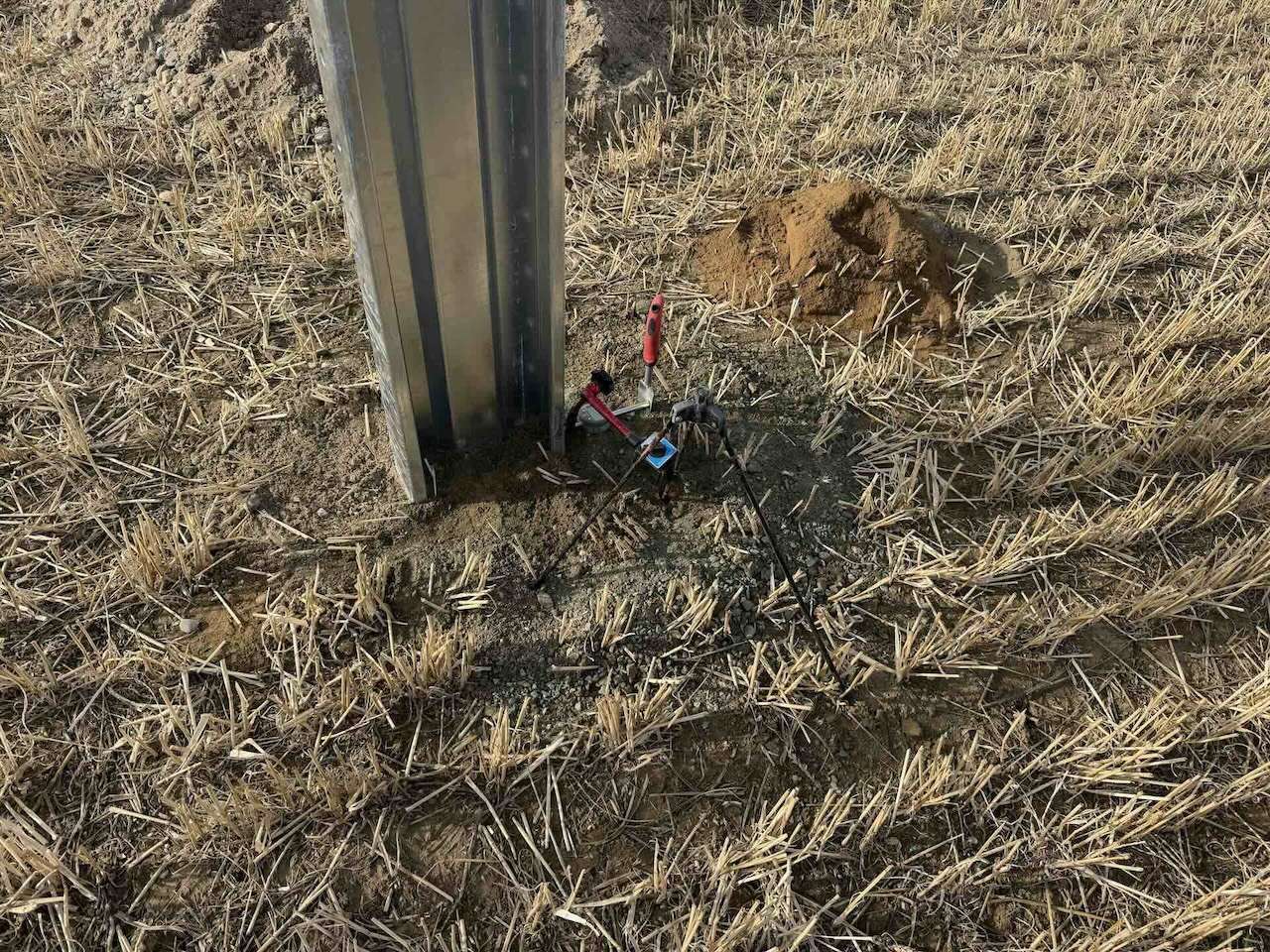
The substructure of the agrivoltaic system is pile-driven without concrete foundations. As a result, the area actually sealed remains well below 1 %.
Soil protection was also a focus before construction began. The ground investigations, including driven core soundings, were coordinated with the harvest cycles in order to treat the arable soil as gently as possible.
Shared grid infrastructure with a wind farm and battery storage
The agrivoltaic system in Soest will feed in via the grid connection of a neighbouring wind farm. Each installation has its own feed-in capacity, but they share central parts of the infrastructure, in particular the cable route and the grid transfer point.
Wind and sun complement each other in their generation profiles: photovoltaics supplies electricity mainly during the day and in summer, while wind energy more often achieves high yields at night and in the winter months. Combining both types of generation allows better utilisation of the grid.
This approach is becoming increasingly important for project developers and landowners. Free grid connection capacity is today one of the biggest bottlenecks in the expansion of renewable energy. The combination of agrivoltaics, wind energy and, in future, battery storage can help to use existing infrastructure more efficiently.
How agrivoltaic projects can be further optimised with battery storage is shown in our article on agrivoltaics with battery storage.
Outside EEG support: why planning certainty still matters
For Ylektra, the Soest project shows that new business models can enable photovoltaic projects outside conventional EEG support under suitable conditions. At the same time, a single project does not replace a reliable regulatory framework for the market as a whole.
“In Soest we are showing that agrivoltaics can be realised outside EEG support under the right conditions. But that does not mean the industry can do without a clear and reliable regulatory framework.”
Dr. Michael Peters, Managing Director of Ylektra GmbH
Long-term investment in energy infrastructure requires planning certainty. Innovative business models can complement a reliable regulatory framework, but not replace it.
Ylektra as project developer and EPC general contractor
Ylektra supports the agrivoltaic project in Soest over the entire project life cycle. As project developer and EPC general contractor, Ylektra is responsible for the technical, economic and construction implementation.
This includes:
- project development
- permit planning
- grid connection planning
- technical design
- procurement
- construction coordination
- turnkey construction
- commissioning
For the owner, Markus Schlotmann, this means clear interfaces, a single point of contact and project implementation geared towards agricultural use from the outset.
“Agrivoltaics solves the problem of competition for land between agriculture and solar power generation. That is why I deliberately chose an agrivoltaic system.”
Markus Schlotmann, farmer and owner
Commissioning of the agrivoltaic system planned for mid-2027
Commissioning of the agrivoltaic system with tracker technology in Soest is planned for mid-2027. Until then, Ylektra is following the construction site in a series of articles on ylektra.com.
Further insights into key project phases are planned:
- pile foundations and substructure
- installation of the single-axis trackers
- shared grid connection with the wind farm
- possible optimisation through battery storage
- commissioning and operating experience
The Soest project shows how agrivoltaics, tracker technology and intelligent grid infrastructure can be thought of together.
Assess an agrivoltaic project with Ylektra
Are you planning an agrivoltaic system with tracker technology or would you like to make better use of an existing grid connection? Ylektra supports you from site analysis through permitting and grid connection planning to turnkey construction.
FAQ on the agrivoltaic system with tracker technology
What is an agrivoltaic system with tracker technology?
An agrivoltaic system with tracker technology combines agricultural use and solar power generation on the same land. Trackers align the PV modules with the position of the sun over the course of the day, so yields can be distributed more evenly over the day.
Which agrivoltaic system is Ylektra building in Soest?
In Soest-Deiringsen, Ylektra is building an agrivoltaic system with an output of around 5.1 MWp. Single-axis trackers in 2P configuration are used. The system is planned as category 2 agrivoltaics under DIN SPEC 91434.
What are the advantages of tracker technology for agrivoltaics?
Tracker technology can distribute electricity generation more evenly over the day. In addition, the movement of the modules makes the shade move across the land instead of lying permanently in one place. In agrivoltaics, this can benefit the crops between the module rows.
Does the land at the Soest agrivoltaic system remain available for farming?
Yes. With the agrivoltaic system in Soest, more than 90 % of the land remains available for farming. The sealed surface is well below 1 %, because the substructure is pile-driven without concrete foundations.
What role does Ylektra play in the agrivoltaic project?
Ylektra is project developer and EPC general contractor. The company is responsible for planning, permitting, procurement, construction and commissioning of the agrivoltaic system.
What does agrivoltaics category 2 under DIN SPEC 91434 mean?
Category 2 describes ground-level agrivoltaic systems in which agricultural cultivation takes place between the module rows. With this type of system, a large part of the land remains available for agriculture.
When is the agrivoltaic system in Soest to be commissioned?
Commissioning of the agrivoltaic system in Soest is planned for mid-2027.


