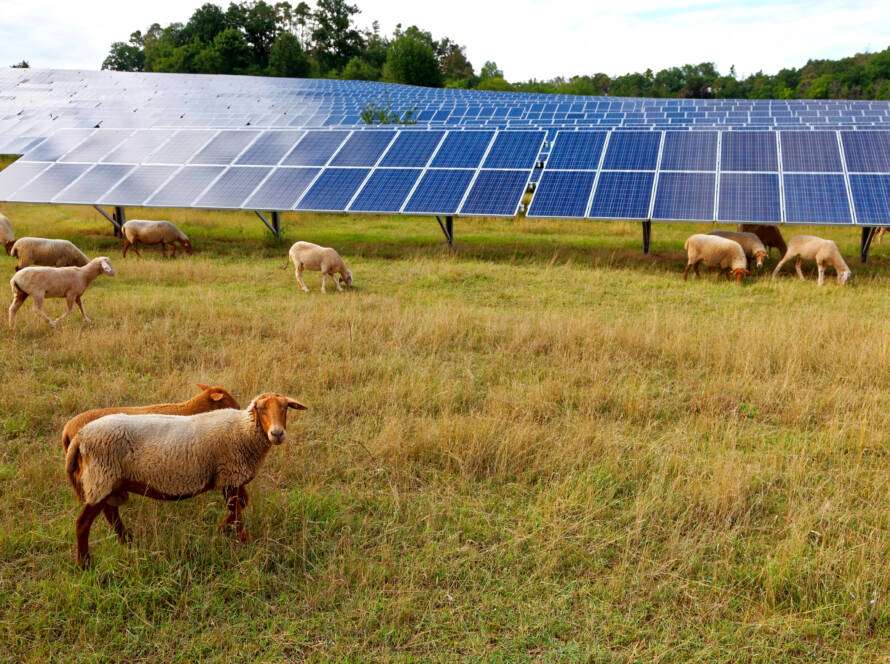
The EEG reform announced at the Energie & Klima conference on Dec 3, 2025 signals a structural shift toward market‑based remuneration and flexible plant design. Below we summarise key measures and deliver clear operational guidance for Agri‑PV projects larger than 1 MW.
Context & timing
At the 2nd Energie & Klima conference (Dec 3, 2025) Christian Schmidt, Head of the Electricity Department at the BMWK, outlined first details of the EEG amendment. The reform is planned for cabinet submission in early 2026 and is targeted to enter into force in early 2027. Further clarifications were expected by year‑end 2025.
Market actors such as Enerparc are pushing for a cabinet decision in Q4 2025 to reduce uncertainty and accelerate the EU state‑aid approval process, which is a prerequisite for key parts of Solar Package I to become operational.
1. Price signals must reach renewable assets without distortion
BMWK emphasised that wholesale price signals should be passed through to renewable generators as directly as possible. Concretely, negative or very low day‑time prices will increasingly impact operator revenues, accelerating the decline of fixed ct/kWh feed‑in models.
Recommended action: Implement direct marketing strategies and dynamic revenue optimisation tools now.
2. New hybrid support mechanism: flat‑rate + production‑based
The ministry is evaluating a potential‑based remuneration: a flat, production‑independent payment applies in high‑load hours (strong wind & sun), while traditional production‑based EEG payments remain for other hours. Advisors will draft the exact parameters.
Impact for Agri‑PV: midday peaks—typical for Agri‑PV—would primarily fall into the flat‑rate window, improving the business case for east‑west layouts, trackers and integrated storage.
3. Two‑sided Contracts for Difference (CfDs) from 2027
To meet EU requirements, Germany plans to implement two‑sided CfDs that skim excess profits at high market prices while guaranteeing a minimum price during low‑price periods. This reduces price volatility for investors but caps upside potential.
Finance implication: CfDs will increase bankability but require updated financial modelling and adjustments to return expectations.
4. Stronger market orientation & PPA enablement
Long‑term PPAs are a central instrument in the BMWK’s market‑based strategy. The ministry is considering guarantee instruments to make PPAs more attractive to banks and offtakers. Policymakers will also encourage new installations to operate without EEG support where feasible.
Operational recommendation: build PPA origination and commercialisation capabilities early.
5. Grid connection & cable pooling: the 2026 package
The 2026 grid package will include traffic‑light grid management, shared connection points (cable‑pooling) and strengthened system‑friendly plant operation rules. Cable‑pooling enables multiple producers to share one connection point—a major cost and resource efficiency lever for rural projects.
Site strategy: consider land‑pooling, partnerships with wind operators and municipal utilities for combined grid access and cost sharing.
EU state‑aid status for Solar Package I (Agri‑PV bonus)
Solar Package I entered into force in Germany in May 2024, but key bonus provisions for special PV formats such as Agri‑PV remain subject to EU state‑aid approval.
Status (end of 2025): The European Commission has not yet granted approval. Consequently, intended bonus rates (including the Agri‑PV maximum tariff) are not currently applicable. The federal government is in active talks with Brussels; industry observers see a realistic decision window in H1 2026.
Developer implication: run conservative scenarios with and without bonus rates; prioritise PPA strategies and ensure contractual flexibility.
Conclusion — What this means for Agri‑PV projects & developers
The EEG 2026/27 reform shifts Agri‑PV into a market‑oriented, flexible regime. The strategic direction is clear: more market exposure, stronger system integration, and higher design flexibility. Developers who proactively incorporate PPAs, flexible layouts (east‑west, trackers, storage) and cable‑pooling concepts will secure a structural competitive advantage.
Quick checklist for project teams
- Model assets under expected EEG‑2027 revenue mechanisms (including two‑sided CfDs).
- Prioritise long‑term PPAs and build origination capabilities.
- Evaluate east‑west orientations, trackers and short‑term storage for midday flattening.
- Engage early with grid operators on cable‑pooling opportunities.
- Prepare bid‑ready scenarios with and without Agri‑PV bonus rates.
Interested in developing an Agri‑PV project?
Those planning an Agri‑PV project are strategically well positioned with Ylektra — Germany’s leading independent Agri‑PV developer. We support the full value chain: potential analysis, permitting, grid connection and commercialisation. We already model assets against expected EEG‑2027 scenarios and design tailored PPA and cable‑pooling strategies.