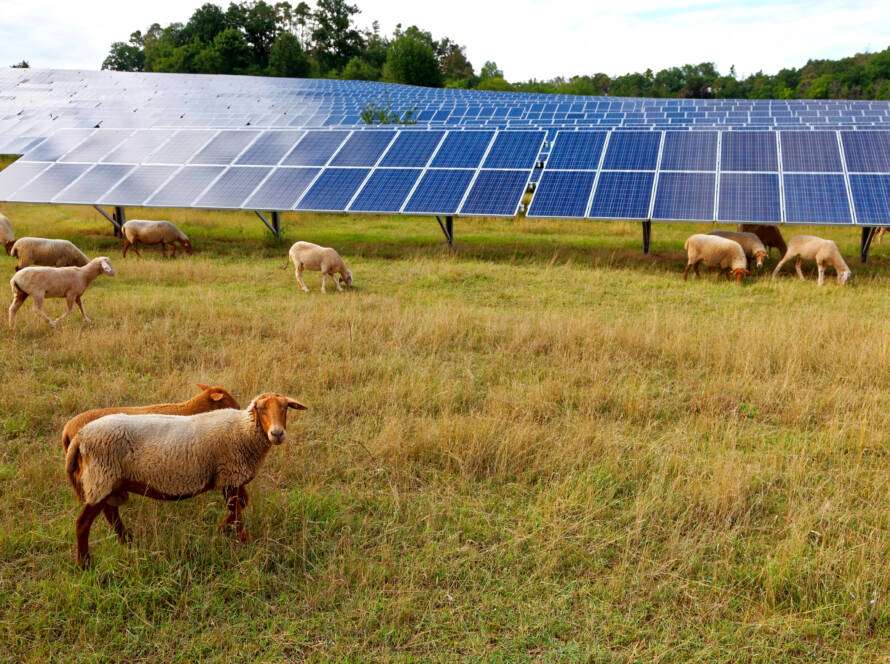
The new EEG 2025 reshapes the framework for agricultural photovoltaics (Agri-PV). While farm-near Agri-PV systems up to 1 MW remain privileged and benefit from a fixed tariff of 9.2 ct/kWh (for commissioning in 2026), larger projects must compete in public tenders. But is it economically viable to scale up? Ylektra has analyzed profitability and return for farm-based Agri-PV systems – based on realistic project parameters and market data.
We are frequently asked by farmers and investors whether a 1 MW farm-near plant is more profitable than a 2 MW tendered plant. To bring full transparency to this recurring question, we’ve run the numbers under consistent, real-world assumptions.
💡 Profitability of Farm-Based Agri-PV Systems (Example: 2.5 ha)
The following figures are indicative averages reflecting typical economic conditions for such systems.
| Parameter | Approx. Value |
|---|---|
| Area | 2.5 ha farm-near (privileged, < 300 m from farm) |
| Technology | Ylektra single-axis tracking system (sun-following) |
| Yield | 1,250 kWh/kWp per year (avg. 20 years, incl. 0.5% degradation) |
| System density | 1 MWp / 1.2 ha → 2.5 ha = 2.08 MWp |
| CAPEX (turnkey) | 1 MW: 800 €/kWp • 2 MW: 760 €/kWp (–5% scale effect) |
| Financing | 10% equity, 90% debt, 4.5% interest, 20-year term |
| Inflation (OPEX) | +2% per year (maintenance, insurance, etc.) |
| Subsidy period | 20 years (EEG 2025 – 1 MW: 9.2 ct/kWh fixed • 2 MW: tendered) |
| Self-consumption | 0% |
| Calculation period | 20 years |
💰 Fixed Cost Structure: Stable Financing, Moderately Rising OPEX
| Costs | 1 MW Privileged | 2 MW Tendered |
|---|---|---|
| CAPEX (turnkey) | €800,000 | €1,520,000 |
| Equity (10%) | €80,000 | €152,000 |
| Annual loan repayment | €51,350 | €97,570 |
| Avg. OPEX / year | €17,650 | €33,550 |
| Total annual cost | €69,000 | €131,120 |
⚡ Revenue & EEG 2025 Comparison
For privileged 1 MW systems, the tariff of 9.2 ct/kWh (commissioning 2026) is guaranteed for 20 years. Tendered systems, however, face competitive bidding. Based on current trends, Ylektra expects tender results to fall below 7 ct/kWh, as many large-scale projects (>5 MW) – including those developed by Ylektra – benefit from significantly lower specific costs.
| Revenue | 1 MW | 2 MW |
|---|---|---|
| Annual yield (kWh) | 1,203,000 | 2,406,000 |
| Tariff | 9.2 ct/kWh | ? (tender) |
| Annual revenue | €110,676 | ? |
📊 Break-even & Return Analysis
- Equal annual profit: A 2 MW system must achieve 7.18 ct/kWh to generate the same annual profit (€41,676) as a 1 MW system.
- Equal IRR: To match an 8.7% internal rate of return like the 1 MW system, the 2 MW system requires 8.95 ct/kWh.
| System | Investment | Annual Profit | Return (IRR) |
|---|---|---|---|
| 1 MW privileged | €800,000 | €41,676 | 8.7% |
| 2 MW @ 7.18 ct | €1,520,000 | €41,676 | 4.9% |
| 2 MW @ 8.95 ct | €1,520,000 | €84,380 | 8.7% |
✅ Decision Matrix: 1 MW vs. 2 MW Farm-Based Agri-PV
| Tender Result | Recommendation |
|---|---|
| < 7.18 ct/kWh | Build 1 MW – higher profit per invested euro |
| 7.18 – 8.94 ct/kWh | Build 1 MW – better IRR |
| ≥ 8.95 ct/kWh | Build 2 MW – equal or higher return |
📈 Conclusion: Profitability of Farm-Based Agri-PV in 2025
- 1 MW farm-based (privileged): 8.7% return at €800,000 investment.
- 2 MW tendered: requires at least 8.95 ct/kWh to reach the same IRR.
- At 7.18 ct/kWh, profit remains €41,676 but IRR drops to 4.9% – meaning the 1 MW plant yields more per invested euro.
As we expect tender prices to settle below 7 ct/kWh, 2 MW systems currently offer lower returns than privileged 1 MW farm-based projects.
🚀 Next Steps: Get Your Free Agri-PV Profitability Calculator
Calculate your individual ROI based on land size, location, and technology – including break-even and IRR simulation.
Contact us: info@ylektra.com or 📞 +49 2236 39 53 989
Disclaimer
All values are indicative averages based on typical market parameters. CAPEX, OPEX, yields, and financing conditions may vary depending on site characteristics, supply chain factors, and technical configuration. Every Agri-PV project requires individual evaluation.